By Nilesh Vijaykumar
It’s finally that blissful time of night when you sink into the warm embrace of your bed. The day’s chaos dissipates, and you’re ready to unwind and indulge in your favourite nighttime frolic:
Your smartphone screen illuminates the dimly lit room, casting its glorious glow as you eagerly dive into your digital oasis. Instagram reels, TikTok videos, and a flood of Tweets beckon, offering a sweet escape from the mundane. It’s just you and your trusty compadre – your smartphone – embarking on a nocturnal journey through the vast expanse of cyberspace.
Confession time: I’m totally guilty of indulging in this nightly ritual myself!
And according to a recently published study by researchers from the University of Copenhagen, I may have been screwing up my health – one scroll and one night at a time.
As per the study – termed the SmartSleep Study – our nighttime smartphone indulgences might be contributing to our expanding waistlines.
Not only that, but they could be trapping us in a relentless cycle of smartphone use, poor sleep, and obesity — a vicious loop with far-reaching consequences.
In this article, we embark on a journey through the findings of this eye-opening study, peeling back the layers of the relationship between smartphone use, sleep quality, and weight gain.
Nighttime smartphone use boosts overweight risk
One of the standout discoveries of the SmartSleep Study was the significant relationship between sleep quality and weight.
The study found that individuals who reported poor sleep quality were found to have a 19 percent higher likelihood of being overweight compared to those who enjoyed a restful sleep.
What’s more, similar trends were observed for obesity, highlighting the profound impact of sleep on our metabolic health.
Now, let’s zoom in on the most eye-popping finding from the SmartSleep Study: the jaw-dropping 51 percent surge in the risk of being overweight associated with nighttime smartphone use. Yes, 51 percent!
But how does nighttime smartphone use lead to overweight and resulting obesity? There are various pathways and a particularly vicious circle.
Continue reading and you’ll find out.
How does nighttime smartphone use lead to weight gain?
Various pathways can lead to weight gain from nighttime smartphone use. Here are three main pathways:
Pathway 1: Melatonin Disruption
You’re snuggled up in bed, ready to call it a night. But instead of drifting off into dreamland, you reach for your smartphone and dive into the digital world. This messes with your body’s internal clock, disrupting the release of a hormone called melatonin.
Melatonin regulates many processes in your body: your sleep-wake cycle, your energy levels and even how your gut behaves. So, when melatonin production gets thrown off track, it can wreak havoc on your metabolism and make it easier for those extra pounds to sneak up on you.
Pathway 2: Sleep Deprivation and Inactivity
Your late-night rendezvous with your smartphone messes with your sleep cycle, leaving you feeling more like a zombie than a human come morning. So, you stumble through the day, feeling weak, uninterested in physical activities, and possess the perfect reason to avoid exercising after work. As a result, you are adding more pounds than you are losing during the daytime.
Pathway 3: The Vicious Cycle of Smartphone Use and Poor Sleep
When you have been indulging in the nighttime usage of smartphones over the years, chances are you are stuck in a vicious cycle of self-destruction that’s hard to break.
Research shows that folks dealing with obesity tend to have more sleep problems. And when you can’t sleep, you might turn to your smartphone for some late-night scrolling to help you relax or fight off insomnia. But here’s the kicker: using your smartphone at night can worsen your sleep problems, leading to weight gain.
It’s like a never-ending loop where poor sleep and obesity feed into each other, making it tough to break free from the cycle.
Conclusion: Ditch the smartphone at night!
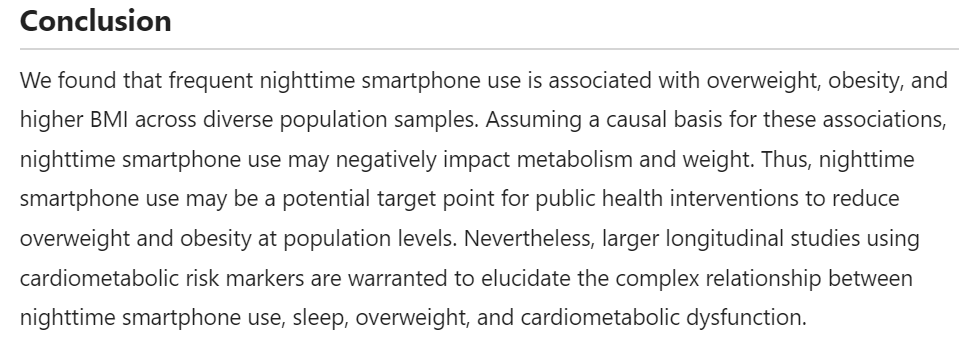
It’s essential to recognize the potential consequences of our smartphone habits, particularly when it comes to our health. The findings of the SmartSleep Study serve as a wake-up call, prompting us to reevaluate our relationship with our smartphones and prioritise sleep.
From the significant correlation between nighttime smartphone use and weight gain to the intricate pathways through which our digital indulgences affect our metabolism, the study sheds light on the multifaceted nature of this issue.
It’s not just about the blue light emitting from our screens disrupting our sleep; it’s about the broader impact on our overall health and well-being.
So, what can we do about it? The first step is awareness. From setting boundaries around screen time to establishing a relaxing bedtime routine, there are steps we can take to prioritize restful sleep and mitigate the risk of weight gain and metabolic dysfunction.
It is also essential to sleep well. Oversleeping as well as sleeping less than the prescribed number of hours is harmful to our health and cognition. And no, it’s not eight hours of sleep. Read Unlocking the Secrets of Sleep Duration and Brain Health: Debunking the 8-Hour Myth to find out more about healthy sleeping hours.
Ultimately, it’s about finding a balance between our digital lives and our health. Let’s heed the insights gleaned from the SmartSleep Study and embark on a journey towards healthier habits and happier lives.
Ends//
In a Nutshell
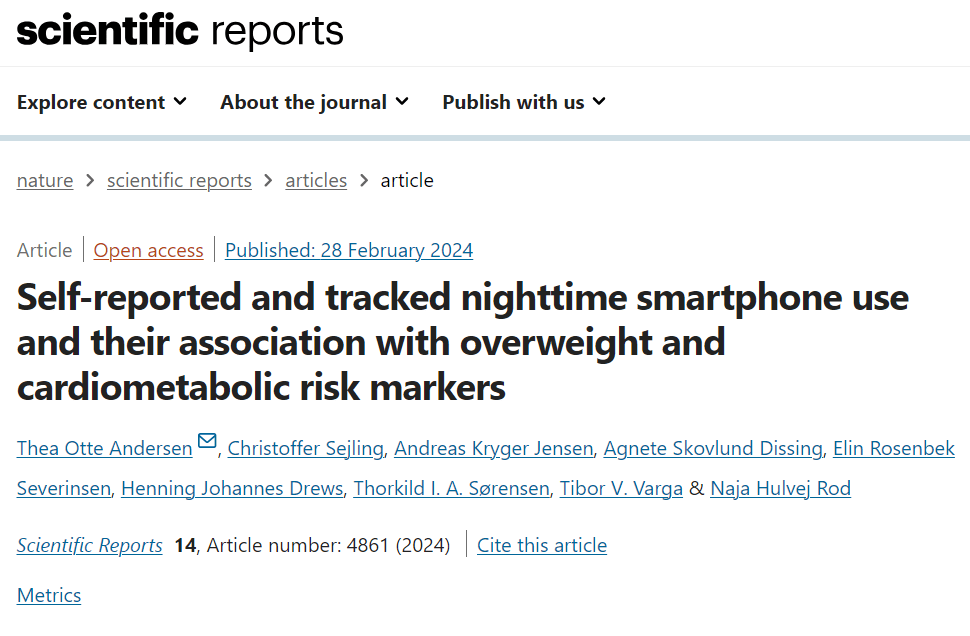
Study Title: SmartSleep Study: Investigating the Impact of Nighttime Smartphone Use on Health
Journal: Scientific Reports
Research Institution: University of Copenhagen
Sample Size: Adults from Denmark across three distinct population samples:
– Citizen Science Sample: Over 25,000 Danish adults aged 16 years and above participated in the survey, providing baseline information on self-reported nighttime smartphone use and its association with BMI changes over 18 months. After the eighteen months, 1,768 individuals were eligible for the longitudinal analysis
– Population Sample: More than 3,222 adults aged 18-50 provided both survey and high-resolution tracking data, offering a detailed understanding of the relationship between self-reported and latent clusters of tracked nighttime smartphone use and BMI.
– Clinical Sample: Approximately 224 young women underwent comprehensive health examinations, including tracking nighttime smartphone use and completing surveys, providing valuable insights into the association between smartphone use and cardiometabolic risk markers.
Key Findings:
- Individuals with poor sleep quality have a 19 percent higher likelihood of being overweight and obese.
- Frequent nighttime smartphone users have a staggering 51 percent higher likelihood of being overweight and obese.
- Higher BMI is consistently linked to frequent nighttime smartphone use across all samples.
- Sleep quality is a crucial factor influencing weight, with poor sleep quality associated with a higher risk of overweight and obesity.
- The association between nighttime smartphone use and weight gain persists even after adjusting for other factors such as physical activity.


Leave a Reply